

April 2, 2026
Hopp
Cloud Security
Listen
The Most Common Cloud Security Mistakes
When people hear “Cloud Security” they imagine complex cyberattacks, shadowy hackers, and advanced exploit techniques. In reality? Most security issues I encounter in Azure environments are caused by misconfigurations and basic vulnerabilities rather than complex, targeted attacks.
Over the past months, I have been working with Microsoft Defender for Cloud, reviewing Azure subscriptions, resolving security tickets, and improving Secure Score across environments.
And? One consistent observation stands out: most security risks usually come from small oversights.
Below are some of the most common security gaps I encounter and how we address them proactively.
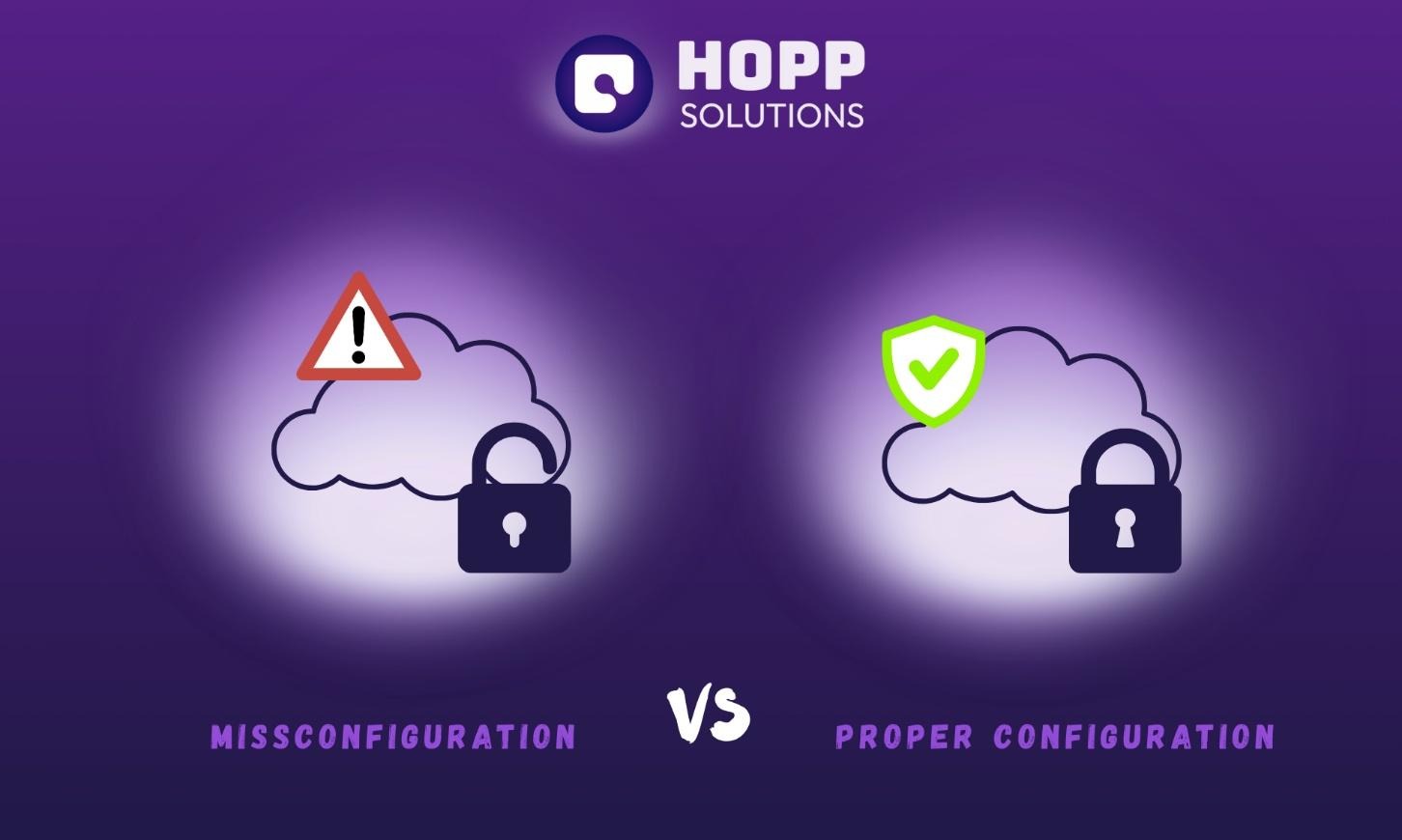
Cloud storage is designed for availability and scalability. However, when storage accounts are unintentionally exposed to the public internet, they can become a significant risk.
In several environments, I have identified:
- Blob containers configured for public access
- Lack of network restrictions
- Test environments left exposed
In practical terms, a publicly accessible storage account is equivalent to leaving sensitive business data in an unlocked, easily accessible location.
Our approach is to disable public access by default and permit it only when justified and approved, apply network restrictions where possible, continuously monitor exposure via security assessments, and regularly review configurations to prevent accidental data exposure.
Security is not about blocking functionality- it is about ensuring that exposure is intentional, controlled, and continuously validated.
Shared Access Signatures (SAS) are designed to provide temporary, controlled access to storage resources. When used correctly, they are highly effective.
However, common issues include:
- Excessive permission scopes (read, write, delete combined)
- Long expiration periods
- Lack of tracking or rotation
An improperly managed SAS token can unintentionally provide extended access beyond business requirements.
Our best-practice implementation is to enforce short expiration windows, apply the principle of least privilege, use Managed Identities whenever possible, and regularly rotate access keys.
During my subscription reviews, I frequently find management ports exposed to the public, such as RDP (3389) and SSH (22).
While these configurations are often implemented for convenience during deployments or troubleshooting, leaving them open to the internet significantly increases the attack surface.
Our mitigation strategy is to replace public exposure with Azure Bastion, enable Just-In-Time VM Access, limit inbound rules to trusted IP addresses, and remove unused public IP addresses.
Reducing unnecessary exposure is one of the most effective ways to boost cloud security.
Microsoft Defender for Cloud provides continuous assessment and actionable security recommendations, including:
- Enabling encryption
- Configuring vulnerability assessments
- Improving identity protection
- Addressing missing patches
In many cases, these recommendations remain unaddressed for extended periods.
Improving Secure Score is not about achieving a perfect number. It is about systematically reducing risk and strengthening resilience. Each resolved recommendation closes a potential security gap.
Through structured review and remediation processes, we help organizations transition from reactive security to proactive governance.
Identity and access management remains one of the most critical aspects of cloud security
Common findings include:
- Excessive Owner role assignments
- Too many Global Administrators
- Lack of periodic access reviews
The principle of least privilege is foundational: users should only have access necessary to perform their responsibilities, nothing more.
By leveraging Role-Based Access Control (RBAC), Privileged Identity Management (PIM), Regular Access reviews, we significantly reduce both internal and external exposure.
Security Is a Continuous Process
One key lesson from actively improving Azure subscriptions is: Cloud security is not a one-time project. It is an ongoing process of assessment, improvement, and validation.
Tools such as Microsoft Defender for Cloud provide visibility, but security maturity comes from consistent action - reviewing configurations, resolving recommendations, and actively identifying risks before they become incidents.
Most cloud security incidents rarely occur because the technology is insufficient. In most cases, they result from configuration gaps that remain unnoticed or unresolved over time.
By addressing common issues such as public storage exposure, excessive privileges, unmanaged access tokens, and open management ports, organizations can significantly strengthen their security posture.
In our work, we focus not only on responding to security issues, but on preventing them. Because in cloud security, prevention is always more efficient than remediation.
Designing and developing digital experiences that move businesses forward.
Contact
hello@hoppsolutions.com
+49 155 1027 5723
+389 77 540 743
Office
Bul. Turisticka 21
6000 Ohrid, North Macedonia
Made with love by Hopp Solutions | 2026