
June 3, 2026
Milena
AI, Marketing, Social Media
Listen
Social Media Management: From Engagement to Conversion
Social media management is often misunderstood as simply posting photos, writing captions, or following trends. In reality, it is a structured strategy that guides people through different stages of interaction with a brand. Every successful social media presence follows a process that begins with engagement, develops into trust, leads to conversion, and continues with retention and growth.
As I continue working on social media management, I am learning that every stage has a purpose, and skipping one usually affects the next. A business cannot expect conversions without engagement, and it cannot build loyalty without trust.
The foundation of every social media strategy is engagement. Before people become customers, they first become viewers, followers, or members of a community. Engagement shows whether people are paying attention to the content and whether the brand is creating meaningful interaction.
Engagement includes:
Many people focus only on follower count, but engagement is often a stronger indicator of success. A smaller audience that actively interacts with content is usually more valuable than a large audience that ignores it.
To improve engagement, content needs to provide value. This value can come in different forms:
One important lesson I am learning is that engagement grows when content feels human. Audiences respond better when brands communicate naturally instead of sounding overly promotional.
Consistency also plays a major role. Posting regularly helps audiences recognize the brand and keeps the account active in algorithms. Social media platforms reward accounts that consistently create interaction.
Once engagement starts growing, the next stage is building trust. Trust is what transforms casual followers into loyal supporters or customers.
People trust brands that:
A strong social media presence should feel reliable. If a business posts randomly, disappears for weeks, or changes its tone constantly, audiences lose interest quickly.
Educational content is especially important for trust-building. When businesses teach their audience something valuable, they position themselves as knowledgeable and professional. For example:
This approach is effective because it gives value before asking for anything in return.
Another major factor is audience interaction. Replying to comments, answering questions, and acknowledging followers helps create stronger relationships. Social media management is not only about publishing content - it is also about communication.
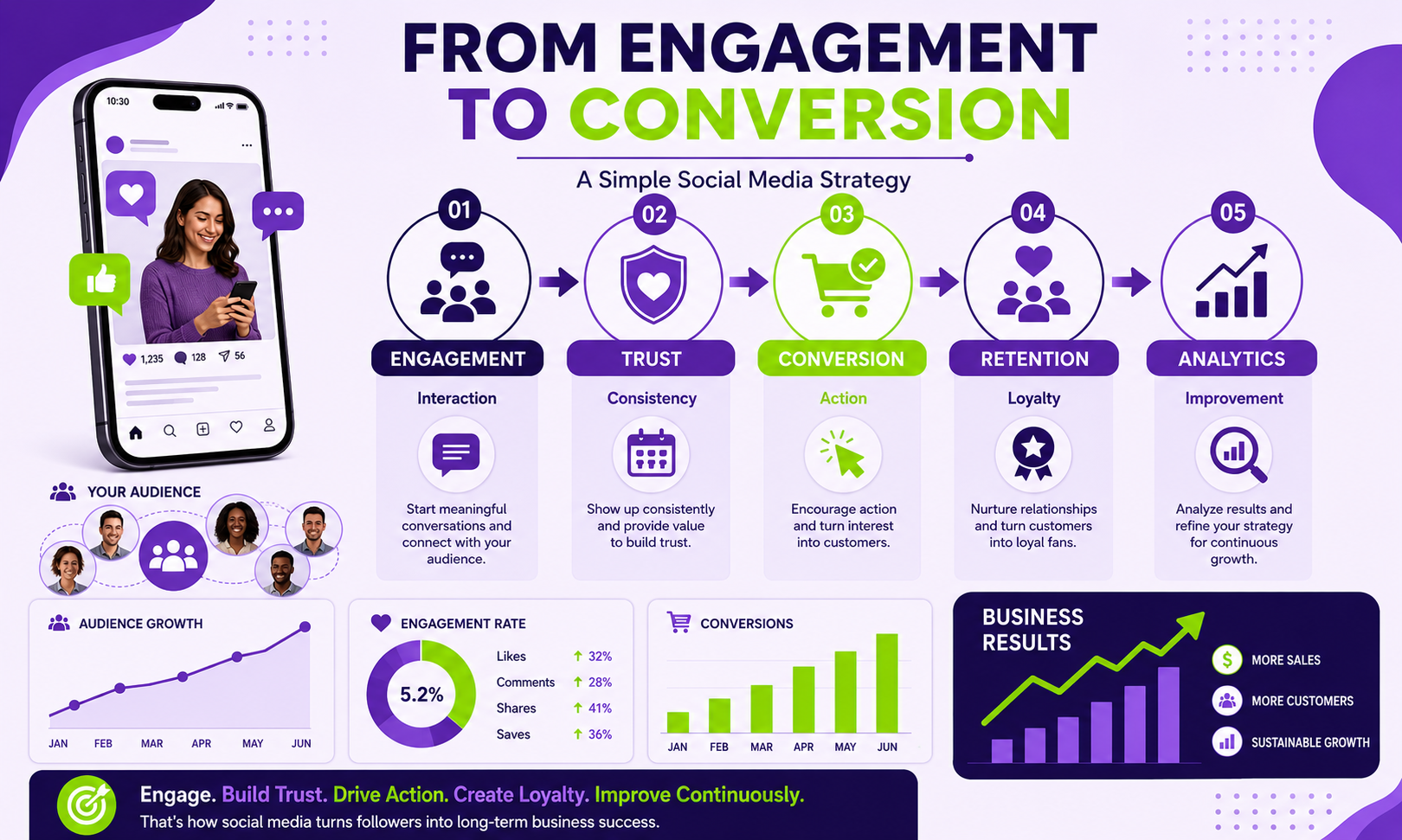
After engagement and trust come conversions. This is where social media starts producing measurable business results.
A conversion can mean:
One mistake many businesses make is trying to sell too early. If audiences do not yet trust the brand, conversion-focused content often feels forced or overly aggressive.
Effective conversion strategies usually include:
A good social media strategy gradually guides audiences toward action instead of pushing them immediately.
For example:
This process is why engagement and trust are so important before focusing heavily on sales.
Many businesses focus only on attracting new customers, but retention is equally important. Social media management should continue even after someone converts.
Retention means maintaining relationships with followers and customers so they continue supporting the brand over time.
Retention strategies include:
Loyal audiences are powerful because they often become brand advocates. They recommend the business to others, share content naturally, and contribute to organic growth.
One of the most important parts of social media management is analyzing performance. Social media is constantly evolving, so strategies need regular adjustment.
Analytics help identify:
Data is valuable because it removes guesswork. Instead of assuming what works, analytics provide measurable insights.
For example, if educational reels consistently outperform static promotional posts, that shows the audience prefers informative vide
o content. This information helps improve future strategies.
Testing different formats, captions, posting times, and content styles is part of the learning process. Growth comes from adaptation and continuous improvement.
Social media management is much more than content creation. It is a complete process that starts with attracting attention and continues through engagement, trust, conversion, and retention.
The most successful strategies focus on providing value first. Audiences connect with brands that educate, communicate clearly, and build genuine relationships.
As I continue working in social media management, I am learning that strong results come from understanding people, creating purposeful content, and building strategies that guide audiences naturally through every stage of the journey.
Social media is not only about visibility anymore. It is about creating connection, trust, and long-term growth.
Designing and developing digital experiences that move businesses forward.
Contact
hello@hoppsolutions.com
+49 155 1027 5723
+389 77 540 743
Office
Bul. Turisticka 21
6000 Ohrid, North Macedonia
Made with love by Hopp Solutions | 2026