
May 4, 2026
Hopp
Cybersecurity
Listen
How Phones Predict What You're Thinking
It can feel strange when your phone shows you an ad for something you were just talking about with friends. Maybe you mentioned wanting new shoes, a holiday, a coffee machine, or a restaurant, and soon after, the same thing appears on your screen. The first thought many people have is, “Is my phone listening to me?” It feels like the most obvious explanation. But in most cases, the truth is more complicated. Phones often do not need to secretly listen, because they already collect enough information to make very accurate predictions.
The idea that phones listen to private conversations is popular because it matches how the experience feels. You say something out loud, and then an ad appears. The timing feels too perfect to be random. However, what usually happens is not direct listening, but a mix of data tracking, location information, search history, social connections, and prediction.
For example, imagine you are talking with a friend about hiking boots. Your friend may have already searched for hiking gear, watched videos about hiking, or clicked on outdoor clothing ads. If you spend time together, follow each other online, or share similar interests, advertising systems may connect your profiles. Later, you see an ad for hiking boots. From your point of view, it feels like your phone heard the conversation. In reality, the system may have used your social connection and behavior patterns to guess what you might care about.
Every time you use your phone, you leave behind small pieces of information. Apps and websites can collect data about what you search, what you watch, what you like, what links you click, where you go, and how long you spend looking at certain content. One single action may not reveal much, but thousands of small actions together create a detailed picture of your interests and habits.
If you search for flights, you may start seeing hotel ads. If you watch fitness videos, you may see ads for sports clothes or healthy food. If you browse furniture websites, your social media feed may suddenly show sofas, lamps, and home decor. Your phone is not guessing randomly. It is using past behavior to predict what you may want next.
This is why ads can feel personal even when you never directly searched for the exact product. You may have searched for something related, clicked on a similar post, visited a certain place, or interacted with content that suggests a new interest. The system collects these signals and turns them into assumptions about you.
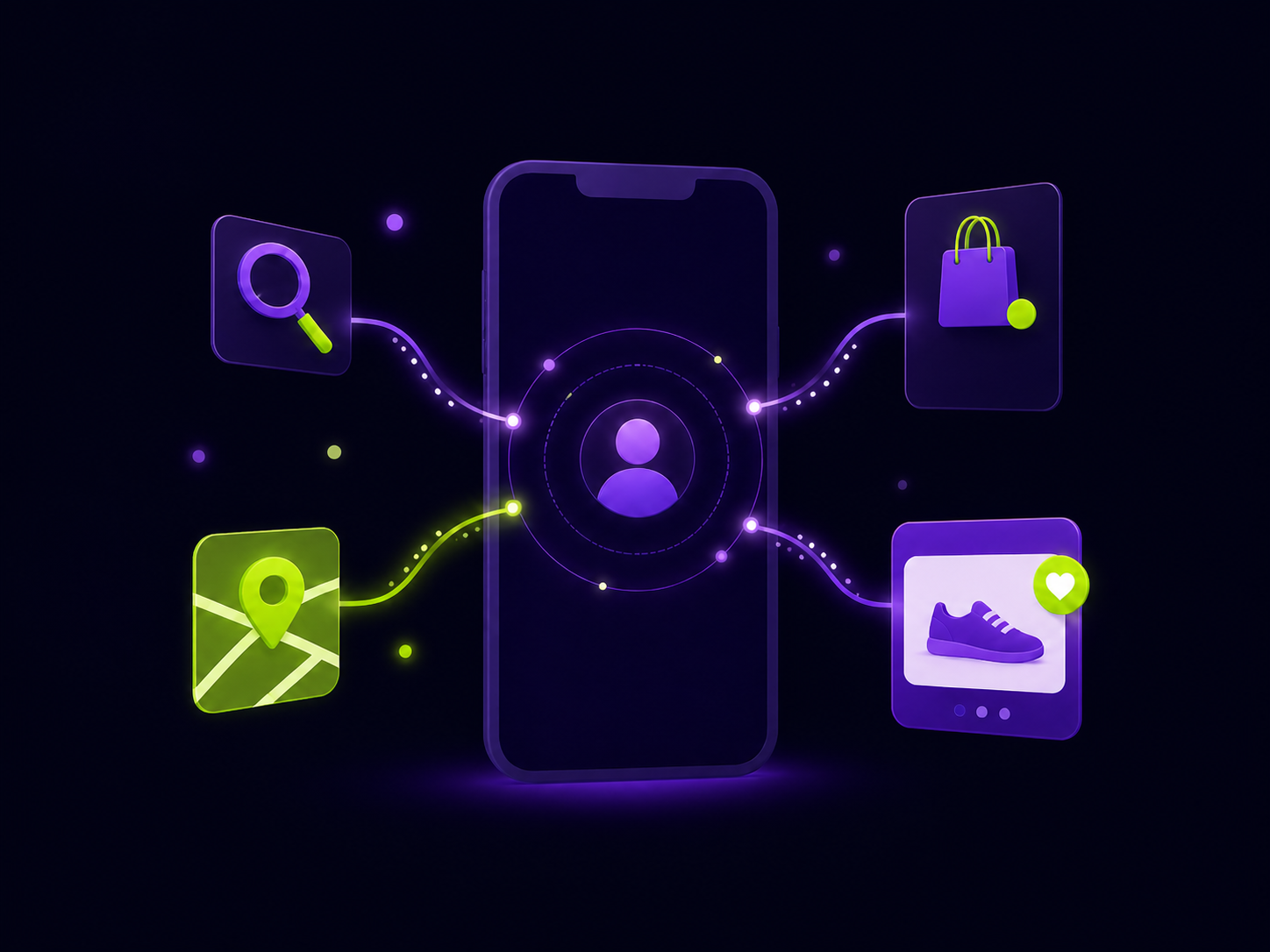
Location data is another reason phones feel like they know us so well. Many apps ask for location access for useful reasons, such as maps, weather, delivery, or ride-sharing. But location can also reveal a lot about your lifestyle. If you often visit gyms, shopping malls, airports, restaurants, or certain neighborhoods, advertisers can use that information to understand your routines.
Location becomes even more powerful when it is combined with other people’s data. If you spend time near certain friends or coworkers, advertising systems may assume you are connected. So if someone close to you has been researching a product, you may later see ads related to it too. This can make it seem like your phone listened to your conversation, when really the system noticed who you were near and what topics were already relevant around you.
Your phone does not only learn from your own actions. It can also learn from the people around you. Social media platforms know who you follow, message, tag, like, and interact with. Even if they are not listening to conversations, they can still understand your social circle.
This matters because people in the same group often share interests. Friends may like the same music, visit the same places, buy similar products, or talk about the same trends. If several people in your circle are interested in a concert, a brand, or a travel destination, the platform may assume you could be interested too. That is why an ad might appear after a conversation with friends. The topic may already be spreading through your network.
Modern advertising is built on prediction. Apps do not only respond to what you have already done. They also try to guess what you are likely to do next. These predictions are based on patterns from millions of users. If people who behave like you often buy a certain product after watching certain videos or visiting certain places, the system may show you that product before you actively look for it.
This is what makes phones feel almost psychic. They are not reading your mind, but they are very good at reading patterns. If you are at a stage in life where people often move homes, travel, start university, buy a car, or change jobs, your ads may reflect those possibilities before you even search for them.
Another reason this feels so unsettling is that we remember the accurate ads more than the random ones. Most ads you see during the day are easy to ignore. They may not match your interests at all, so you forget them quickly. But when an ad connects to something you recently talked about, it grabs your attention.
This creates the feeling that your phone is always listening. In reality, the system may show many irrelevant ads, but you only remember the one that feels too accurate. The prediction does not have to be perfect. It only has to be right sometimes to feel impressive.
There is a trade-off between convenience and privacy. Personalized ads, recommendations, maps, search results, and feeds can make phones feel helpful and efficient. But that convenience depends on data. The more personalized your phone feels, the more information has usually been collected in the background.
This does not mean every app is dangerous, but it does mean users should understand what they are agreeing to. Location access, cookies, app tracking, microphone permissions, contacts, and account connections all affect how much companies can learn. Many people accept these permissions quickly because they want to use the app, without thinking about how their data may be used later.
You cannot completely stop companies from making predictions about you, but you can reduce how much information they collect. You can turn off unnecessary location access, limit ad personalization, review app permissions, clear cookies, use private browsing, and avoid giving every app access to your microphone, contacts, or photos.
These steps will not make your phone completely private, but they can make your digital profile less detailed. The goal is not to stop using technology, but to use it more consciously.
Phones seem to know us well because modern apps are built around data, prediction, and personalization. When you see an ad for something you talked about, it may feel like your phone was secretly listening. But most of the time, the explanation is that your phone already knows a lot from your searches, location, social connections, and online behavior.
The real issue is not only whether phones listen. It is how much they can understand without listening at all. Through data tracking and predictive algorithms, everyday actions become clues about what you might want next.That is why phones can feel helpful, personal, and strangely accurate at the same time.
Designing and developing digital experiences that move businesses forward.
Contact
hello@hoppsolutions.com
+49 155 1027 5723
+389 77 540 743
Office
Bul. Turisticka 21
6000 Ohrid, North Macedonia
Made with love by Hopp Solutions | 2026